How symmetrical is your face?
Upload one photo. The model places 68 landmarks, measures seven feature pairs against your midline, and gives you a number.
Nobody is perfectly symmetrical
Here is one face three times. On the left, the left half mirrored onto itself. In the middle, the actual face. On the right, the right half mirrored. Both mirrors are plausible faces, and neither one is the person.
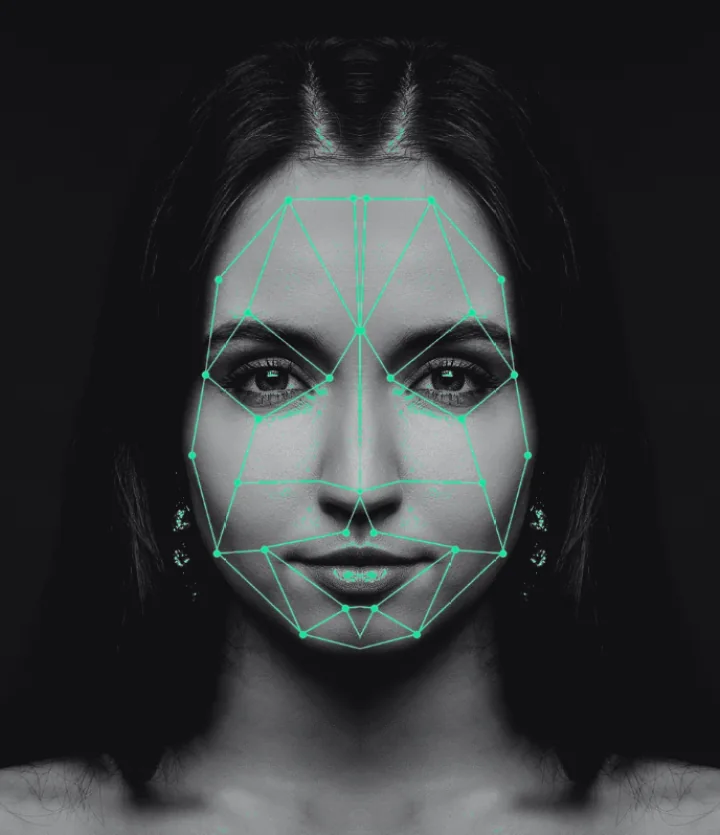
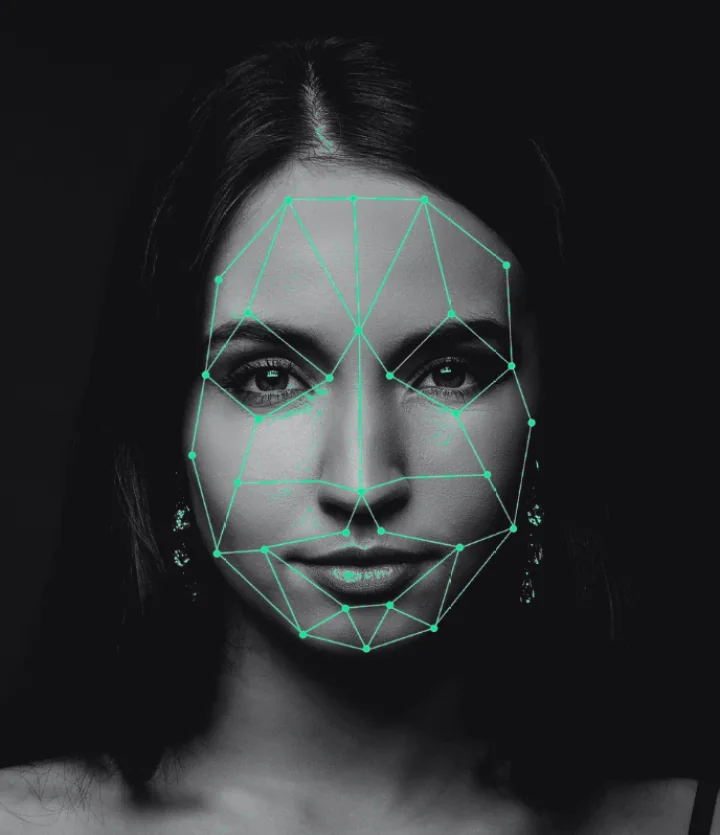
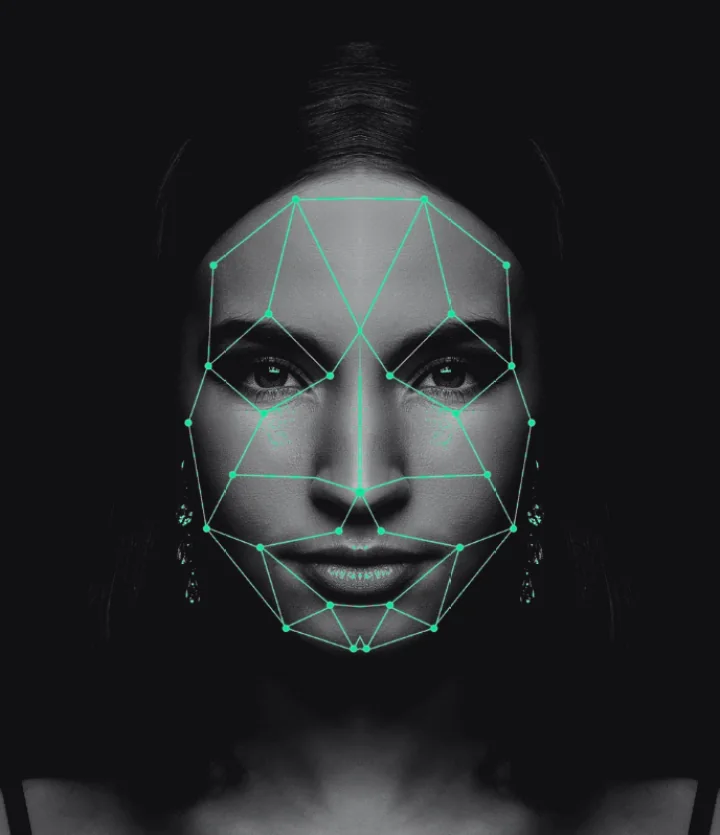
Seven pairs, one midline
Each pair is scored on its own, so you can see which part of your face carries the difference instead of only getting a single verdict.
Corner positions and how level the two eyes sit relative to the midline.
Height and arch. The most expressive pair, and often the least matched.
How far each ear sits from the centre line. Hair covering one side will skew this.
Whether the bridge and the nostrils track the midline or lean to one side.
Corner heights and the width of each half of the lips.
The width of the face at cheekbone height, measured on each side of the line.
The same measurement lower down, near the jaw, where asymmetry shows up most.
How the measurement works
Four steps, no black box. It is landmark detection followed by arithmetic.
-
Find the face
A detector locates the face in your photo and crops around it with a margin. If it finds zero faces or more than one, we stop and ask for a different photo.
-
Place 68 landmarks
A landmark model marks the jaw line, both eyebrows, both eyes, the nose and the mouth. These points are the only thing the rest of the process looks at.
-
Draw the midline
A vertical line is fitted through the centre of the face. Everything after this is measured as a distance from that line.
-
Compare each pair
For every feature pair, the distance of the left point from the midline is compared to the distance of its right counterpart. A small difference scores high. The average of the seven pairs is your overall number.
Getting a clean read
The measurement is only as good as the photo. These four things move the score more than anything else.
-
Flat, even light
Face a window or a lamp. Light from one side deepens the shadow on that half and pulls the landmarks with it.
-
Square to the camera
Head level, eyes on the lens. A small turn makes one half of the face read narrower than it is.
-
A plain background
A busy background behind your head makes the face harder to isolate, especially around the jaw and ears.
-
Nothing across your face
Push hair back, take off glasses and hats. Anything covering one side is measured as part of that side.
What your number actually means
The score is the average of the seven pair scores. It describes one photograph, not your face, and it is not a ranking against anyone else.
The differences are smaller than the noise in an ordinary photo. At this level, your lighting and head angle move the number about as much as your face does.
Small, evenly spread differences across most pairs. Nothing that reads as lopsided at conversational distance.
One or two pairs sit clearly off the midline. This is usually the feature you already notice in photos of yourself.
Either a genuinely asymmetric feature or a difficult photo. Shoot again with flat light and a level head before reading anything into it.
Symmetrical and asymmetrical faces
Two descriptions of the same thing, seen from either side of the line.
A symmetrical face
The left and right sides land in nearly the same place when you fold the face down the middle.
- Eyes level with each other and similarly shaped
- Nose bridge and nostrils tracking the centre
- Mouth corners at the same height
- Cheekbones equally prominent on both sides
Symmetry turns up often in research on facial attractiveness, usually as one signal among many rather than the whole story.
An asymmetrical face
One or more features sit measurably further from the midline on one side than the other.
- One eye slightly higher or a different shape
- A smile that lifts more on one side
- A nose that leans away from centre
- A jaw with a different contour left and right
This is the normal case. Perfectly symmetrical faces are essentially nonexistent, and the small differences are most of what makes a face recognisable.