Face Symmetry Test / Perfectly symmetrical face
What would your face look like perfectly symmetrical?
Pick a straight-on photo and your browser mirrors each half of your face along the midline. You get two perfectly symmetrical versions of you, side by side with the real one. Nothing is uploaded.
Your photo stays on your device. The mirroring happens in your browser and nothing is saved.
That file could not be opened as an image. Try a JPG or PNG.
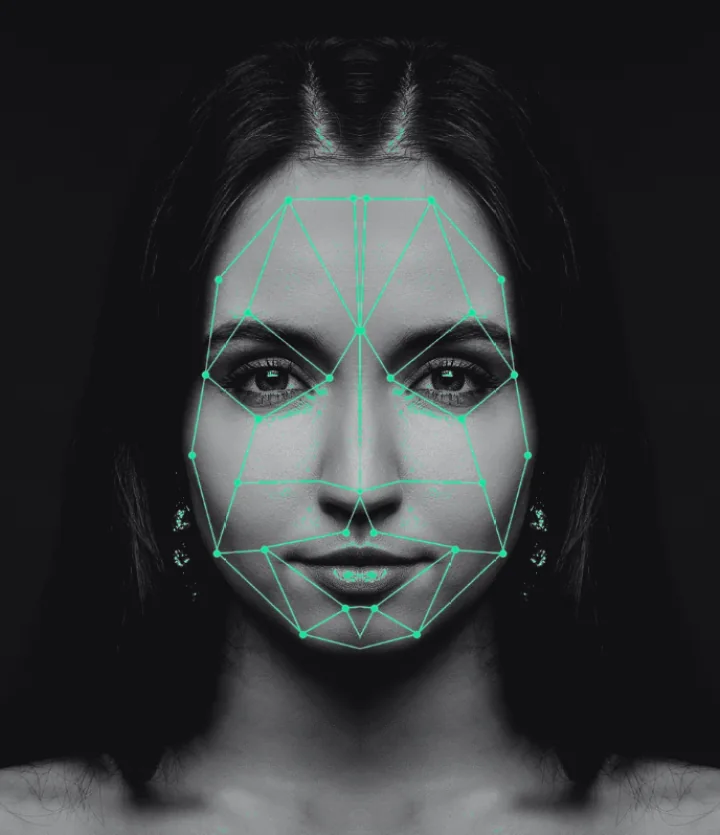
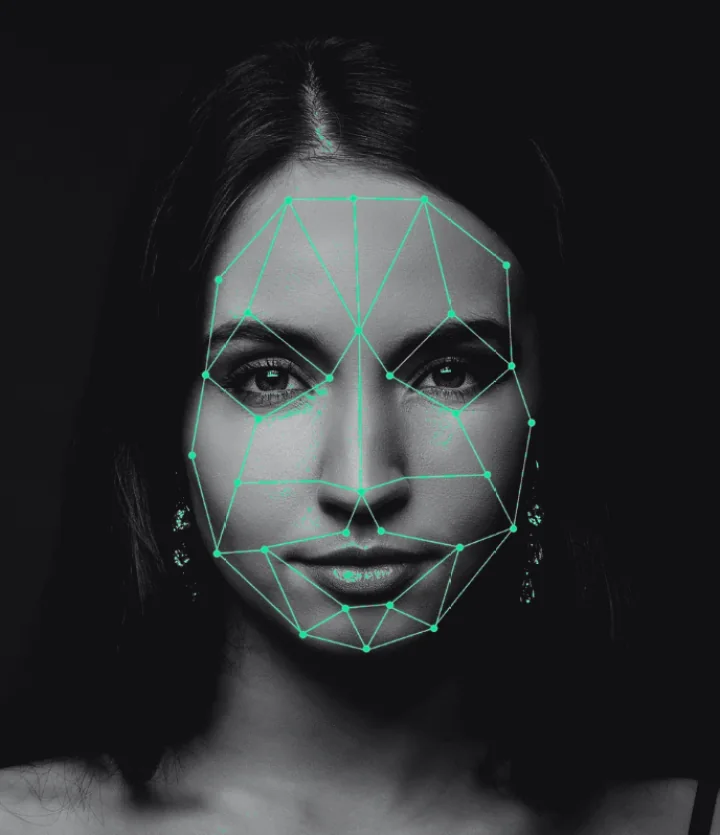
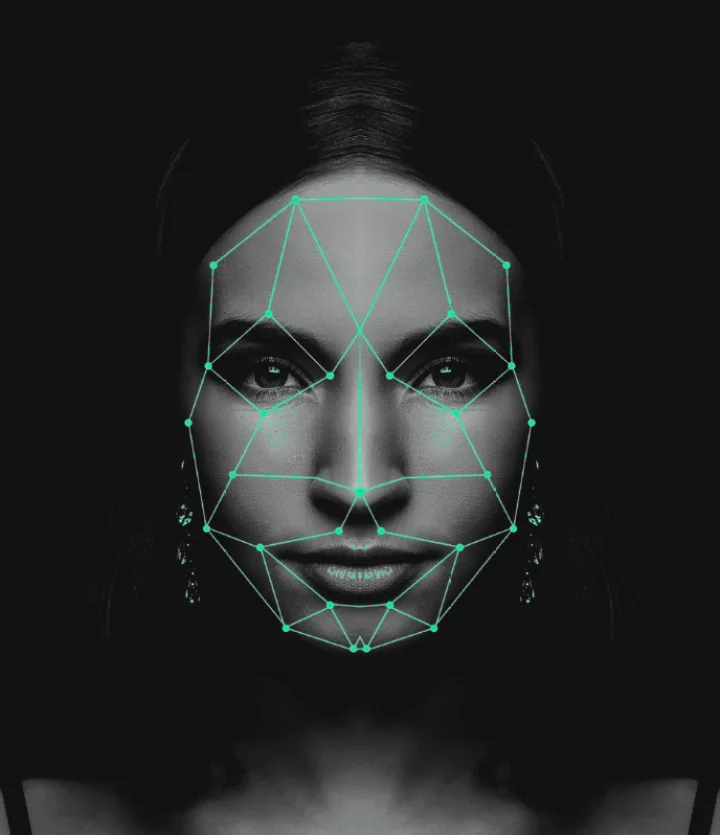
Want a number, not just a picture? The face symmetry test measures seven feature pairs and scores your face out of 100.
How to get a good mirror
- Face the camera straight on, with your head level. A turn of a few degrees makes one half wider.
- Use even light from the front, such as a window you face. Side light darkens one half.
- Hold the phone at eye level and an arm's length away, so close features do not swell.
- Move the slider until the line runs down the bridge of your nose and the middle of your lips.
The two mirrored faces will still look different from each other. That gap is your natural asymmetry, and it is normal.
Does anyone have a perfectly symmetrical face?
No. Every face has small differences between the left and the right. The two sides of the skull, jaw and teeth grow separately, and muscle use, sun and age add more over a lifetime. A review in orthodontics describes mild asymmetry as present even in faces that look perfectly balanced.
So a perfectly symmetrical face only exists in edited images, like the mirrored halves above. When people search for the most symmetrical face, they are really looking for faces that come close.
Is a perfectly symmetrical face attractive?
A little more symmetry tends to help. Perfect symmetry often does not. The research points both ways, and the method explains why.
- More symmetry, rated higher. Rhodes and colleagues (1998) blended each face with its own mirror image to make it more symmetrical without obvious seams. People rated the more symmetrical versions as more attractive.
- Perfect mirrors, rated lower. Swaddle and Cuthill (1995) built perfectly symmetrical faces from mirrored halves. People rated them as less attractive than the originals.
Mirroring one half copies its quirks too. A parting in the hair, a tilt of the head or a shadow gets doubled, so the face looks strangely wide or narrow. That is why one of your two mirrored faces can look like a stranger. The lesson from both studies is the same: symmetry is one small part of what people find attractive, and the most attractive faces are close to symmetrical, not exactly so.
Can a face be 100% symmetrical?
Only in an edited image. A mirrored photo is 100% symmetrical by construction, because one half is a copy of the other. A real face photographed straight on never is.
That is also why our face symmetry test never gives a real photo a perfect score. It places 68 landmarks, draws a midline through the nose bridge and compares seven feature pairs. A score of 100 from a real photo would point to a measuring error, not a perfect face.
Who has the most symmetrical face?
Nobody knows. No one has measured a large group of faces with the same camera, the same light and the same method, which is what a fair ranking would need.
The celebrity rankings that appear in the news each year usually come from comparing faces with the golden ratio. That measures proportions, such as the width of the nose against the width of the mouth. It is not the same as left to right symmetry, and it is one person's method, not a published study. Read such lists for fun, not as fact.
What a perfectly symmetrical you can tell you
The mirror is a quick way to see where your asymmetry lives. If the two mirrored faces differ most around the eyes, your eyes or brows sit at different heights. If they differ in width, your jaw or cheeks are fuller on one side. If they differ in the smile, one corner of your mouth lifts more.
None of that needs fixing. If you want to know why your face is uneven, read about the causes of an asymmetrical face. If one side bothers you, these are the fixes that work.
References
- Rhodes G, Proffitt F, Grady JM, Sumich A. Facial symmetry and the perception of beauty. Psychonomic Bulletin and Review, 1998. doi:10.3758/BF03208842
- Swaddle JP, Cuthill IC. Asymmetry and human facial attractiveness: symmetry may not always be beautiful. Proceedings of the Royal Society B, 1995. doi:10.1098/rspb.1995.0081
- Thiesen G, Gribel BF, Freitas MPM. Facial asymmetry: a current review. Dental Press Journal of Orthodontics, 2015. PMC4686752